Interview with IOTA Co-Founder: Infighting, Skepticism, and Restructuring — How a Former Star Project Is Restarting Its Journey?
TechFlow Selected TechFlow Selected
Interview with IOTA Co-Founder: Infighting, Skepticism, and Restructuring — How a Former Star Project Is Restarting Its Journey?
Today's IOTA is far more than just being called the Internet of Things chain.
 Navigating Web3 tides with focused insights
TechFlow: Sunny
IOTA: Dominik Schiener

"Today's IOTA is far more than just being called an IoT chain."
--Dominik Schiener, Co-founder of IOTA
IOTA may seem unfamiliar to those who entered the crypto space during the last bull market. But for those who joined before 2017, IOTA was once a highly anticipated "10,000x coin" that broke into the top ten on CoinMarketCap, aiming to build a blockchain infrastructure for enterprises and governments focused on IoT.
Back then, IOTA was criticized by MIT Media Lab for developing a so-called 'blockchain' without blocks or chains, deemed technically unreliable. Scholars from Hebrew University in Israel described it as "IOTA is a currency I love to hate," while TechCrunch journalists wrote scathing articles mocking the project. The founding team also publicly clashed on social media.
Controversial projects often grow amid external criticism and pressure.
After one full bull and bear cycle, are the old projects still around? In a recent conversation with IOTA co-founder Dominik, I learned he recently moved to Abu Dhabi in the Middle East, where he’s actively promoting IOTA 2.0, Layer 2 networks, real-world applications, and asset tokenization. "We’ve shed many negative elements—including our outdated technology, some co-founders, and internal conflicts," Dominik said.
As for disputes, it was quite common in earlier years for team members of various projects to publicly feud. Ethereum founder Vitalik even revealed that Ethereum's success stemmed from firing unsuitable employees and founders—what matters is believing the technology is right.
Making a comeback, reinventing itself. Today, IOTA has not only reflected on its past mistakes in decision-making and technology but also repositioned itself: no longer merely an IoT-focused blockchain project, but a general-purpose chain compatible with Ethereum.
While everyone seems to be rushing into Layer 2, IOTA is no exception—but it has greater ambitions: building IOTA into a public chain rivaling Ethereum, targeting government and enterprise clients. Beyond the Middle East, IOTA has established a presence in the EU and Africa, partnering closely with governments to achieve its long-standing mission: "Digital Autonomy for All."
Below is an edited transcript of TechFlow's interview with IOTA co-founder Dominik Schiener.
TechFlow: What’s your background and how did you come to found IOTA?
Dominik:
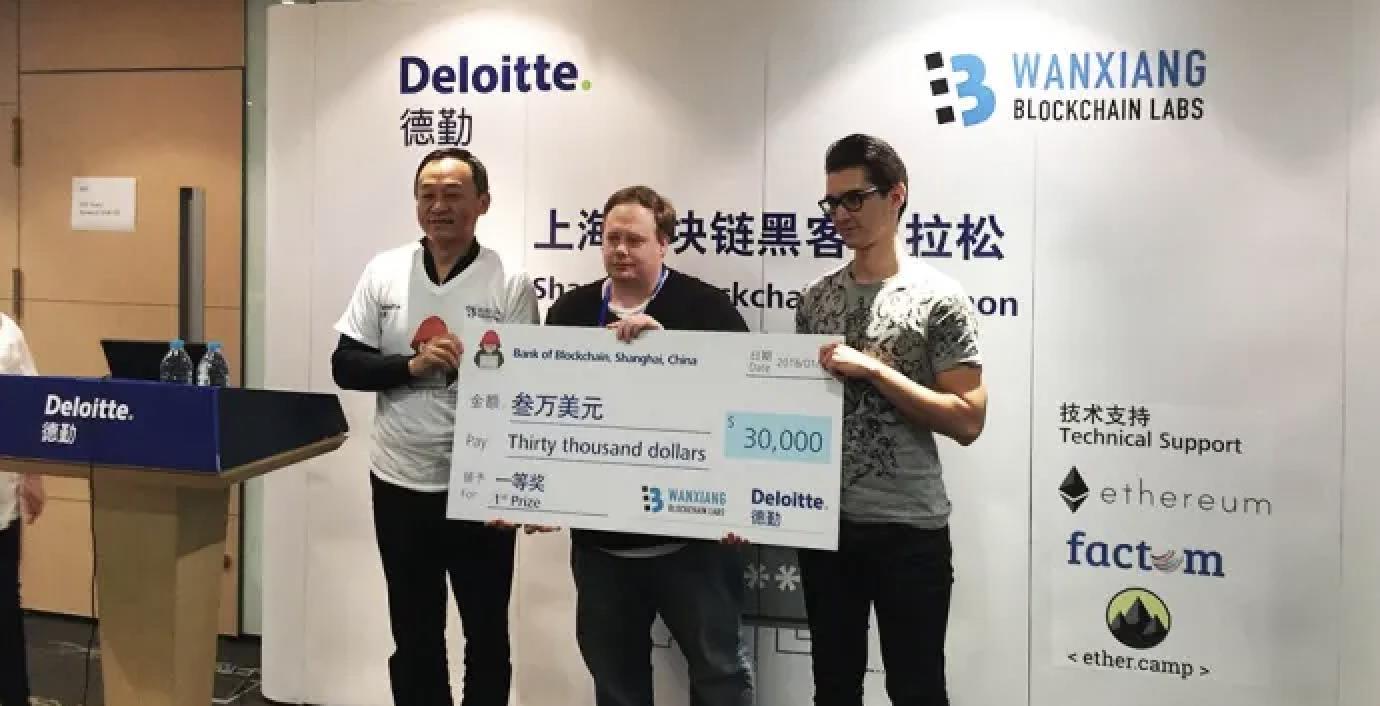
I got involved in cryptocurrency back in 2011 and have been working full-time in the industry since 2012. I started with mining, then had the idea of creating a cryptocurrency exchange. I joined Crypto Valley in Zurich, contributing to its development and favorable regulatory environment. However, our efforts didn’t succeed. During the 2013–2014 bear market, I lost a significant amount of money. At the time, I was very young—only 18—and deeply obsessed with crypto. My interest shifted to Ethereum, and I upgraded my skills through connections with Ethereum’s founders and by participating in events at Wanxiang Blockchain Labs, where I won the largest blockchain hackathon in 2016.
At the end of 2015, I co-founded IOTA. The core vision of IOTA had two main aspects.
-
First, we realized blockchain itself had scalability limitations—high transaction fees, energy consumption, and miner control over the network. We saw the need to invent a new architecture that could overcome these constraints and move beyond single-threaded blockchains.
-
Instead, we aimed to create a multi-threaded architecture, similar to the evolution of microprocessors—not relying on a single core to execute transactions, but using multiple cores to process as many transactions as possible. This led to the creation of the Tangle concept, and in 2015, we were pioneers in developing this new architecture.
The second goal was exploring new use cases. At the time, blockchain was still relatively new, and few people understood DeFi, NFTs, or tokenization. Everyone was exploring possibilities across broad directions.
IOTA took the lead in driving blockchain adoption by collaborating with large corporations, governments, and enterprises. To achieve this, we established a non-profit foundation in Germany and actively sought regulatory clarity. Our goal was to help big companies integrate IOTA and develop various use cases in mobility, energy, trade and logistics, digital identity, smart governance, and smart cities. In 2017, when blockchain adoption was still low, IOTA stood out as a pioneer, demonstrating the potential of the technology.
TechFlow: After the numerous public criticisms directed at IOTA and its team following 2017, what happened?
Dominik:
Between 2018 and 2020, I’d say we redefined IOTA’s goals and eliminated some controversies.
For IOTA, we were essentially starting from scratch:
-
We raised only $500,000 during our 2015 ICO.
-
Unlike other projects, we didn’t have a large reserve fund because we didn’t allocate a huge portion of our token supply to ourselves. Others had hundreds of millions of dollars to invest in marketing and growth.
IOTA was truly a community-driven project. Growing from nothing to something massive meant handling large amounts of money and power. As a result, co-founders often had differing opinions—many of them lacked experience working with large corporations or managing big projects.
They were essentially first-time entrepreneurs. So naturally, they evolved during the startup journey. When people change, conflicts arise—everyone has pride, but everyone also wants the project to grow bigger.
These differences led to disagreements. Compared to Ethereum, unfortunately, IOTA’s disputes became public. I know there were many controversies within Ethereum too, especially in the early days, but they kept them private.
With IOTA, there was a promise of complete transparency, so the fights played out publicly. That’s why people used to associate IOTA with controversy.
That’s also why we needed to change and ensure we stayed true to IOTA’s original mission.
What we clearly did then was reposition IOTA in the market, shedding the bad parts—including our outdated technology, which was extremely difficult to use and cumbersome (for example, one-time addresses, etc.).
TechFlow: So how has IOTA changed compared to before?
Dominik:
When thinking about IOTA today, it should no longer be seen solely as an IoT-focused project.
We’ve improved other problematic areas—such as the board—and parted ways with some co-founders.
From 2020 to 2022, we focused on upgrading IOTA’s protocol so it wouldn’t be limited to IoT or enterprise use cases alone, but could support DeFi, NFTs, and smart contracts, making IOTA compatible with the Ethereum Virtual Machine (EVM).
In 2022, we launched ShimmerEVM, an evolved version of IOTA, as a testing platform ahead of the main product rollout. Recently, we released ShimmerEVM—a fully EVM-compatible Layer 2 network—that will soon be live on IOTA. This evolution has transformed IOTA from a clunky, hard-to-use chain in 2015 into a highly scalable network with one-second finality and thousands of transactions per second (TPS). Now, with EVM compatibility, integrating DeFi and new applications onto IOTA and Shimmer is possible.
Our next phase, IOTA 2.0, will introduce a leaderless consensus algorithm, staking mechanisms for network security, and a fully scalable, decentralized network. This major update is scheduled for release early next year, positioning IOTA as a full competitor to Ethereum. Additionally, we’re working to bring smart contracts to our Layer 1 to enhance utility and shared security. Our technical roadmap is supported by a professional team of around 110 people at the IOTA Foundation, backed by extensive peer reviews and collaborations with renowned institutions such as Imperial College London and the University of Zurich.
Shimmer EVM has already attracted several key projects, with a total value locked of approximately $2.5 million. The network is still in its early development and bootstrap phase. Next, our focus will be adding more bridges for liquidity and expanding Shimmer’s listings on additional exchanges.
TechFlow: After repositioning, has IOTA’s strategy with governments and enterprises changed?
Dominik:
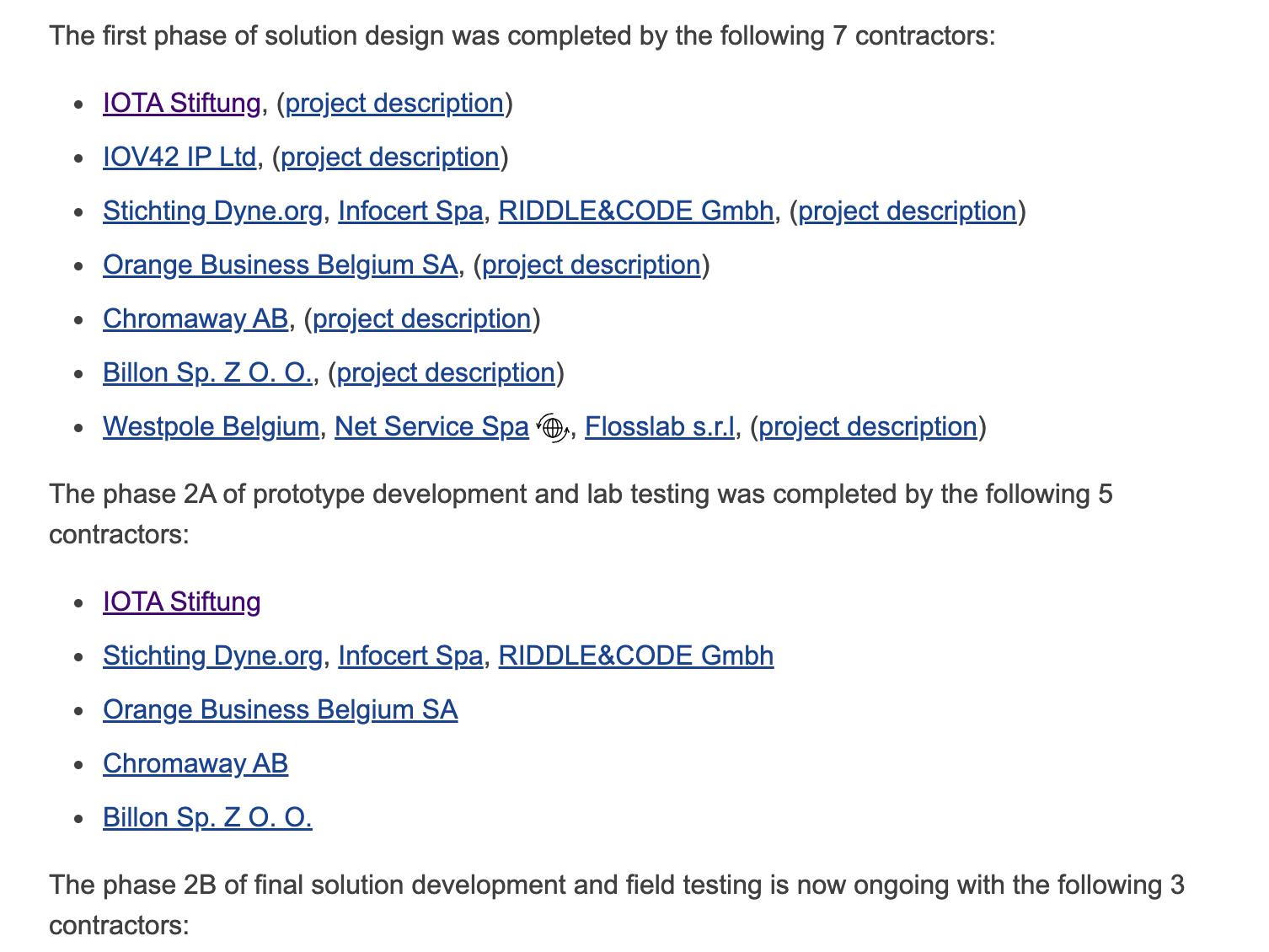
IOTA excels in real-world applications and is involved in initiatives such as building European blockchain infrastructure and developing digital trade systems and digital identity solutions in Kenya.
Our focus is positioning IOTA as the preferred ledger for digital trade and transparent supply chains. Additionally, we’re actively advancing tokenization—starting with U.S. Treasuries and gradually expanding into real estate and other securities. We believe this will attract new users and create new financial markets on blockchain. Gaining regulatory approvals and collaborating with governments are key components of our strategy. We have dedicated teams handling regulatory affairs and forming partnerships with government bodies. While IoT remains an important application area, our scope is broader—covering diverse use cases such as human digital identity and financial applications. Currently, we’re focusing on key IoT use cases like machine digital identity and product passports.
TechFlow: What use cases is IOTA currently exploring that have positive social impact?
Dominik:
Trade finance is indeed an exciting use case, particularly in promoting financial inclusion. Our goal is to create liquidity pools supporting farmers in countries like Kenya and Tanzania, enabling them to export goods and access funding. By leveraging blockchain technology and our capabilities, we can empower individuals and provide banking services to the unbanked. We’re actively working on projects in this space and consider it one of our key future focus areas.
References:
Join TechFlow official community to stay tuned
Telegram:https://t.me/TechFlowDaily
X (Twitter):https://x.com/TechFlowPost
X (Twitter) EN:https://x.com/BlockFlow_News
 深潮TechFlow