Podcast Notes | Alliance DAO's Wang Qiao: Reflections on Bear Market Investing, Project Landscape, and the Intersection of AI and Crypto
TechFlow Selected TechFlow Selected
Podcast Notes | Alliance DAO's Wang Qiao: Reflections on Bear Market Investing, Project Landscape, and the Intersection of AI and Crypto
AI agents can use blockchain interfaces for permissionless programming and utilize tokens like ETH, but this may introduce certain risks.
 Navigating Web3 tides with focused insights
Compilation & Translation: TechFlow
In a recent episode of Empire, Jason sat down with Wang Qiao, Partner at Alliance DAO, to discuss AI, Crypto, and the current state of market investments. They began by assessing prevailing market sentiment, reflecting on ongoing project development, and analyzing the types of founders and projects currently raising funds. Additionally, they explored the intersection of cryptocurrency and AI, covering decentralized AI and consumer-facing AI crypto products.
Below is the compiled summary of their conversation:
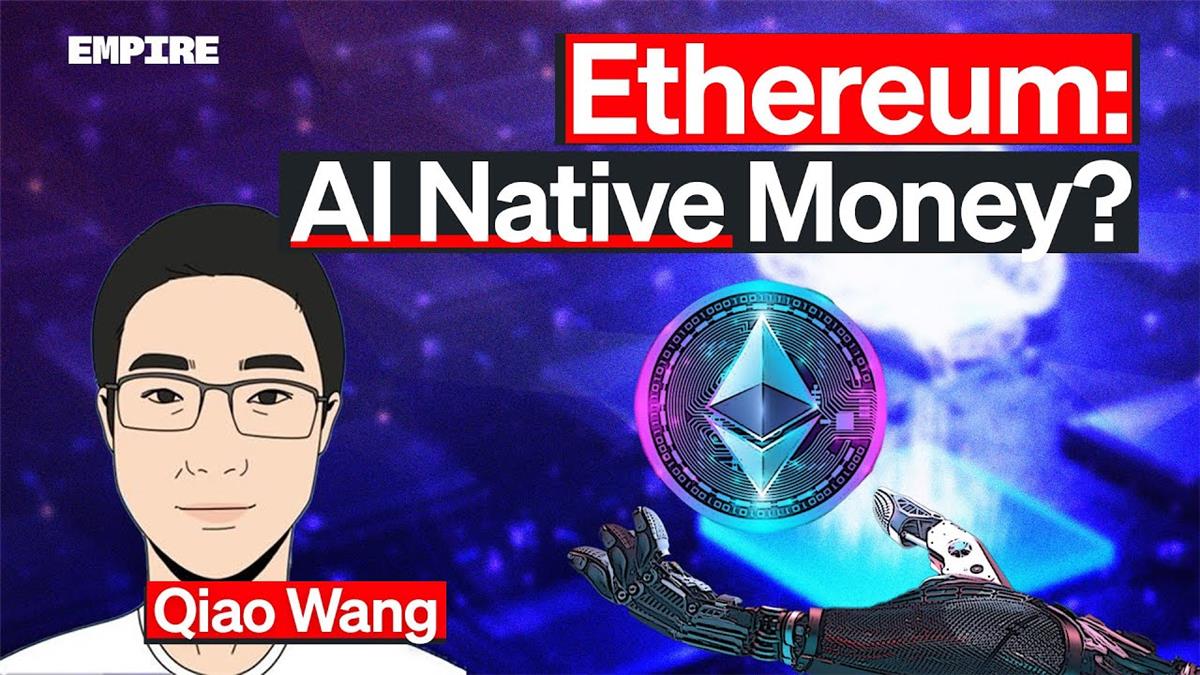
Host: Jason, Empire
Guest: Wang Qiao, Partner at Alliance DAO
Video Credit: Empire Podcast
Episode: Link
Release Date: July 26
Market Sentiment, Conditions, and Phase Assessment in the Bear Market
-
Wang Qiao believes that from a venture capital perspective, the private early-stage market in crypto is essentially dead. (Note: The "private early-stage market" typically refers to private investment markets such as seed, angel, Series A, and Series B funding rounds—“early-stage” indicating these occur in the initial phases of a company's lifecycle.)
-
He referenced a chart showing monthly changes in venture capital funding within the crypto space. The data indicates we are now at the lowest level of VC funding since the previous bear market.
-
He also noted that despite Bitcoin’s price doubling this year, the private market continues to bleed slowly. Founders are facing significant fundraising challenges.
-
Jason suggested that while some funds may have cash reserves, they are reluctant to deploy it—or unwilling to call capital from their limited partners (LPs).
-
Wang Qiao speculated there could be several reasons. One is that although funds have cash, they may have taken risks in deals a year ago that they can no longer justify to LPs. Another possibility is that the private market typically lags behind public markets by two to four quarters, so investors are still waiting.
-
Additionally, many developers are shifting from crypto to AI. They cited a report from Electric Capital showing that both the number of new developers entering crypto and the count of active developers have declined by 25% to 50% from their peaks a year ago.
-
Finally, Jason asked Wang Qiao for his outlook on the future of the crypto market. Jason proposed that we might be transitioning from the third phase (the “boring” phase) into the fourth phase (the “rebirth” phase). In the rebirth phase, promising signs often emerge but are overlooked because people don’t believe the market will recover. However, Wang Qiao did not fully agree with this view.
-
Wang Qiao believes we are still in the boring phase—a prolonged process of market bottoming. He also pointed out that because the crypto ecosystem is much larger than in the previous cycle, macroeconomic factors now have a greater impact on crypto markets.
Status of Developers and Projects
-
Wang Qiao mentioned that most startups today are building infrastructure, rather than consumer-facing products. These infrastructure projects include zero-knowledge proofs (ZK), scaling solutions, wallet infrastructure, and more.
-
He expressed hope for seeing more consumer-oriented startups, especially those with innovative and potentially controversial ideas.
-
They discussed the types of projects developers are currently building. Wang Qiao noted that many are developing on chains like Ethereum, Polygon, Solana, and Arbitrum. He also mentioned an ongoing competition between Solana and Arbitrum, with Solana fluctuating between 3rd and 4th place in rankings.
-
Meanwhile, Wang Qiao expressed confusion about why developers would choose to build directly on Ethereum’s mainnet instead of on Arbitrum or Optimism.
-
They also discussed dydx’s strategy of building its next version using Cosmos. However, Wang Qiao said he hasn’t seen others adopt this approach or shift toward Cosmos.
What Kind of Founders Do Crypto Projects Need?
-
They first discussed founder profiles. Wang Qiao noted that only a small fraction of entrepreneurs achieve significant success. For example, some founders previously built unicorn companies in Web 2.0.
-
He observed a recent trend: nearly all new startups are now founded by crypto-natives—unlike during the bull market peak two years ago, when many engineers came from FANG companies or Web2. (Note: "FANG" is an acronym referring to four major U.S. tech giants: Facebook, Amazon, Netflix, and Google.)
-
He feels reassured that today’s founders are committed to crypto through bear markets, as they are deeply rooted in the space and have been building in it for a long time.
-
Next, they discussed how founders navigate difficult periods. Jason referenced a tweet from Wang Qiao earlier this year, which stated that for crypto professionals, the second year of a bear market is often the hardest—because there seems to be no light at the end of the tunnel. But simply recognizing this gives one a major advantage. By the third year, conditions begin to improve.
-
They also touched on conflicts among founders. Wang Qiao believes product growth resolves all issues, whereas lack of growth leads to various co-founder disputes. He emphasized that investors should pay attention to founder dynamics, ideally backing teams who have worked together for a long time.
-
Wang Qiao mentioned that internally they have a term for founders like those at Tensor—they call them "Tensorians." They actively seek founders with similar traits. A typical ideal founder has unique insights into their users.
Global Crypto Trends and AI Development
-
Wang Qiao noted that about one-third of their applicants come from Asia, though the majority still originate from the United States.
-
He added that Latin America may be a few years behind in crypto development, but increasingly, Latin American founders are now building what U.S. founders built years ago for the region. Founder activity is also rising in Dubai and Hong Kong.
-
They then turned to AI development. Wang Qiao shared that he feels people—especially consumers—are disappointed with the current state of AI.
-
He referenced a fascinating study showing that GPT's performance has declined over recent months. One hypothesis is that OpenAI’s human feedback mechanisms may have changed, as millions of users now provide feedback, possibly degrading model quality.
-
A more likely explanation, he suggested, is that OpenAI may now prioritize AI safety over performance—deliberately reducing model capabilities to prevent misuse of powerful tools.
-
When asked where AI stands on the Gartner Hype Cycle, Wang Qiao recalled a tweet he posted two months ago suggesting we may have already reached the peak of inflated expectations. However, he acknowledged that due to the rapid pace of AI advancement, this phase might last only a few months. (Note: The Gartner Hype Cycle is a model developed by consulting firm Gartner to illustrate how emerging technologies progress from inception through hype, disillusionment, and eventual maturity.)
The Intersection of AI and Crypto
-
Jason and Wang Qiao delved deeply into the convergence of artificial intelligence (AI) and crypto, particularly focusing on developer productivity, decentralization of AI, and privacy concerns.
-
First, they discussed how AI enhances developer productivity. Wang Qiao shared experiences from an internal hackathon where his team used GPT (Generative Pre-trained Transformer) to write code—even non-technical members were able to produce functional code.
-
He emphasized that GPT significantly boosts productivity for junior developers. He highlighted a tool called "Code Interpreter," which allows developers to describe tasks in plain English and automatically generates corresponding code.
-
Next, they discussed the importance of decentralizing AI. Wang Qiao argued that just as we believe money, social networks, and finance should be decentralized, we should resist allowing powerful AI models to be controlled by centralized entities.
-
He pointed to OpenAI possibly degrading its model performance as evidence of why we shouldn't grant such power to any single entity.
-
Privacy was another concern: interacting with ChatGPT involves sending large amounts of personal data, which makes many users uncomfortable.
-
They explored potential solutions. Wang Qiao mentioned edge computing—running open-source models locally on personal devices instead of relying on cloud-based services like OpenAI.
-
He further explained that with edge computing, users own the model (since it’s open-source) and retain control over their data (as nothing needs to be sent to OpenAI’s servers).
-
Additionally, GPU supply shortages remain an issue. Decentralized AI aims to solve this by enabling regular consumers to join compute networks using their consumer-grade GPUs.
AI Agents and Consumer-Grade Crypto Products
-
They began by discussing the concept of AI agents. Wang Qiao mentioned an open-source project created by a venture firm aimed at consumers, allowing users to launch an AI agent and assign it tasks.
-
For instance, you could instruct an AI agent to start a podcast. The agent would research the required steps, break down the task, and execute each step sequentially until completion.
-
They also discussed applications of AI agents in crypto. Wang Qiao noted that AI agents could use blockchain APIs for permissionless programming and transact using tokens like ETH. However, this introduces certain risks.
-
Overall, they expressed optimism about the synergy between crypto and AI. Wang Qiao said he is most excited about GPT because it enables anyone to write code faster and more efficiently. He believes this reduces product development costs by an order of magnitude, greatly benefiting developers.
-
He added that this especially benefits individuals with great ideas but lacking technical skills to implement them. With GPT, turning ideas into real products becomes significantly easier.
-
They also touched on the future of social networks. Jason posed a question: What would happen if more social tokens emerged?
-
Wang Qiao mentioned a product he had seen that allows users to book time with celebrities, which can then be traded on open markets—an alternative way to speculate on influencers or creators.
Join TechFlow official community to stay tuned
Telegram:https://t.me/TechFlowDaily
X (Twitter):https://x.com/TechFlowPost
X (Twitter) EN:https://x.com/BlockFlow_News
 深潮TechFlow