








Interview with the CEO of BAYC's Parent Company: What We're Building Is Content and Community
TechFlow Selected TechFlow Selected
Interview with the CEO of BAYC's Parent Company: What We're Building Is Content and Community
From Web2 to Web3: Yuga Labs' Vision and Risks
 Navigating Web3 tides with focused insights
Yuga Labs CEO Daniel Alegre attended an in-person event hosted by the Overpriced APEC podcast in Austin to share some of his insights and development plans.
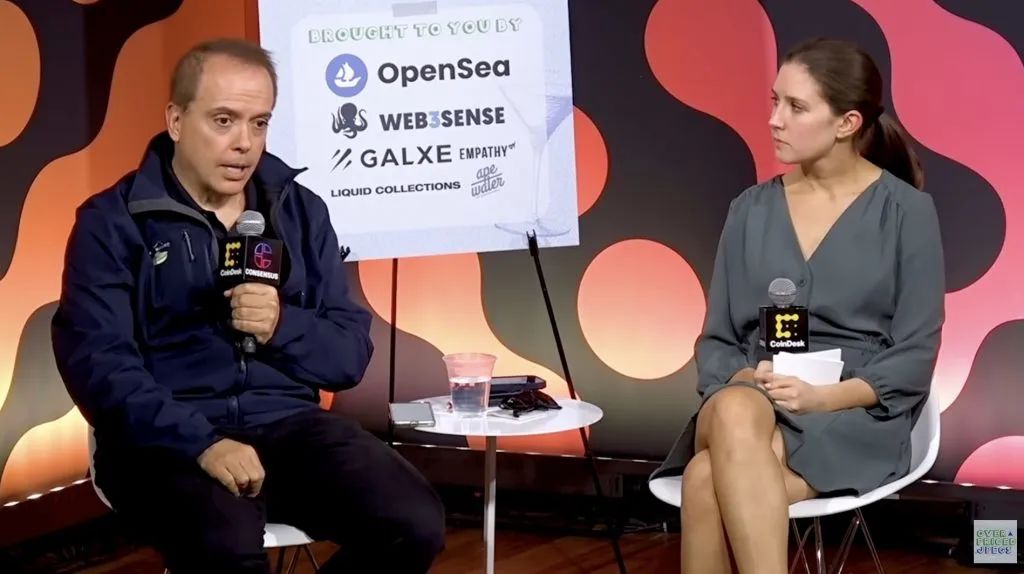
Host Carly Reilly: Judging by the number of people in this room, I know many others are deeply interested in this conversation. When you were announced as the new CEO, it felt very significant—even though you’ve only recently started officially. It’s truly inspiring and exciting because you come from one of the world’s largest gaming companies, having served in a C-suite role, and now you’re entering our Web3 world to lead Yuga Labs.
Today, you have a major announcement—I believe it’s about hiring Mike Sievers as the new CTO of Yuga Labs. Mike was most recently EVP at Epic Games and previously served as CTO at Riot.
He has an impressive background in gaming. To kick off our discussion, I’d like to ask you to share your vision for Yuga. What did you say to Mike to convince him to leave his high-level position in a Web2 gaming company and join us in the challenging Web3 space? How did you pitch it?
Daniel: Originally, I was trying to recruit Mike Sievers to be CTO at Blizzard Entertainment. But about three weeks after we opened up the Fract division, the Microsoft deal was announced, so I decided to pause the CTO role for Fract. Still, I never forgot Mike’s talent. So when I joined Yuga Labs, I immediately called him and said, “Do you remember our previous conversations? There’s a great company—Activision Blizzard—but there’s an even better one: Yuga Labs.” I shared with Mike the vision for Yuga Labs and where I want to take the company. I promised he’d meet some incredible people, including highly innovative, culturally aligned individuals who deeply understand Web3. You’ll see Mike achieve amazing things building on the founders’ legacy at Yuga Labs.
Host Carly Reilly: Did you need to sell him on Web3, or was he already interested?
Daniel: Sometimes you run into situations like this—I believe many of you have experienced it. When I spoke with him, he frankly admitted he hadn’t thought much about it and, honestly, didn’t really understand Web3. But then I began explaining my reasoning, which also answers your next likely question: why do this at all?
Host Carly Reilly: Alright, please go ahead—now’s your chance to speak freely and efficiently.
Daniel: The reason I came to Web3 is clear. Blizzard Entertainment owns some of the world’s most iconic games—World of Warcraft, Call of Duty, Overwatch, Diablo, and more. While I was there, two things happened that seemed obvious but only became fully apparent once I sat in the executive seat. One is this: no matter how good your game is, it won’t succeed without influencer endorsement. Even with strong branding, TV ads, or online display campaigns—if key influencers don’t back your game, nothing moves.
Now, look at what Ryan Reynolds has done with Mint Mobile. Influencers are moving beyond just being brand ambassadors or talking about games. They actually want to participate in the entire ecosystem. They don’t just want to say “Diablo is great” or “this other game is great—pay me.” They’re asking: “How can I become part of the whole ecosystem?” That was a clear signal to me. We need to fundamentally rethink how games function between influencers and players. Gamers invest massive time and money hoping to progress and achieve within games.
Now, if you dislike the next version of a game or hit your limit, you get frustrated and want to start fresh elsewhere. When I was in Miami, I met Yuga Labs’ co-founders Greg and Wylie. We started chatting, and they said, “We can solve this problem for you—and here’s where we want to take Yuga Labs.” Honestly, it was a perfect match. Their focus on content, content creation, and community resonated deeply.
Games aren’t just about gameplay—they’re about the broader entertainment industry and connecting people through entertainment, putting creators and communities at the center. That’s what gaming should truly be about. That’s your path forward.
Host Carly Reilly: I don’t want to dive too deep here, but how did you first connect with Wylie and Greg? Did they reach out, or were you exploring Web3 and looking for partners?
Daniel: A great recruiter told me, “Hey, you should meet these two guys.” We were supposed to have dinner in New York, but it didn’t happen. Later, I visited my parents in Mexico, and they said, “Hey, we’re in Miami—want to fly over and meet?” So I did. Clearly, that was good recruiting.
Host Carly Reilly: I find that very compelling—it shows your belief in this as the future. Here’s something interesting: Roadblock raised funding at a $4 billion valuation in 2020, and many may know Yuga Labs also raised at a $4 billion valuation, both led by A16z. At the time Roadblocks hit that valuation, they had 115 million monthly active users. So what’s your vision for how Yuga Labs will reach 115 million monthly active users?
Daniel: That might underestimate where I’m headed.
That was just bravado. The reality is, there’s a clear tension between where we are now and where we want to go, right? We have a very tight-knit community—Bored Ape, CryptoPunks, MeeBits—and it’s relatively small but deeply connected. We want to preserve that cohesion and keep delivering value to them.
At the same time, I’m not focused on whether we’re valued at $4 billion or $40 billion. What matters to me is delivering exceptional and unique experiences and connections for the community. If that leads to 150 million, 200 million, or 300 million unique users, great. But that’s not the driving force. The real driver is clear—to me, and I think to everyone here—that we’re on the brink of a transformative shift across media, travel, finance, and more. For me, the key is remaining a company known for creativity, connection, and community.
But given our current lead, many expect us not only to keep innovating but also to bring more people into Web3. This is clearly one path forward. It reminds me of the internet in 1994 and 1995. Some of you may recall what it was like to connect. You’d plug a modem into your computer and call your telecom provider. They’d say, “We don’t have anyone who knows the internet.” So someone would show up two weeks later, connect for half an hour, and then it wouldn’t work again.
Then came America Online. They’d mail you a CD. What did you do with it? Pop it into your computer. It was magic—suddenly, people without computer science degrees could access the internet. That’s the opportunity, right? How do we deliver outstanding experiences? Clearly, we must leverage Web3 technology to bring as many potential Web3 users as possible onto our platform. That’s what I want to do with Otherdeed. People keep asking me: Daniel, you come from Activision Blizzard, you just hired an exec from Riot and Epic, your Chief Gaming Officer is from Scopely—are you now a gaming company? We are not a gaming company. We are a content company, a community company. But we’re using games as a gateway into Web3 because the experience closely mirrors online gaming.
Doing things in Web3 shouldn’t feel as daunting as early internet access. By the way, I don’t mean to compare us directly to AOL—since they failed four years later. But the principle is the same. That’s why Spencer Tucker is here—he’s our Chief Gaming Officer, building experiences that let consumers and gamers genuinely enjoy Web3 without feeling commercialized like in Web2. And I must say, that’s what we can do. That’s why we use games as our entry point into Web3—these experiences and technologies can help more people understand Web3. The parallels with online gaming are strong, but Web3’s potential is far greater. Through these experiences, we aim to surprise and engage people.
Host Carly Reilly: So you’re not a gaming company—that’s fascinating—but your current focus is clearly on games. It’s your tool to attract people. For example, you made Dookey Dash. But I find it even more interesting that you have Duty and also casual games like Legends of Mara. I’m curious—how do casual games fit into your strategy for Yuga? When thinking about Otherdeed, do you see it as a standalone AAA game, with casual games like Dookey Dash serving as testing grounds for features or keeping audiences engaged while you build the AAA title? Or do you see Otherdeed as a platform hosting multiple casual games?
Daniel: Do you want a precise and quick answer?
Host Carly Reilly: Let me rephrase: what’s the best analogy for Otherdeed?
Daniel: Looking at what Facebook did with their metaverse helps clarify this. First, the idea that the metaverse is something new is a misconception. The metaverse has existed for a long time. Look at World of Warcraft or Warcraft—they are metaverses. These experiences are metaphors for where Facebook was heading. Essentially, they built tools and functionalities expecting people to love them. Our approach with Otherdeed is very different. We’re building functionalities—some of which are casual games. You can imagine that eventually, gameplay and gamification on Otherdeed will go beyond casual games and become more immersive. We’ll partner with third parties to build apps on this platform. But we’re seeding it with a passionate community that has reasons to gather. This is a fundamentally different approach from other companies—which is why we brought Pudgy Penguins to Otherdeed. They’ve already gone through first- and second-journey gameplay experiences. Spencer and his team are building experiences to unite the community and open their eyes to Otherdeed.
Now, on Otherdeed, you can connect. These are additional things you can do, experiences—just like I mentioned earlier, how Web2.0 players experience Web3. This is how NFT holders experience gamified content on the platform. This is phase one. Eventually, Otherdeed will move beyond its current fragmented state, right?
There was a seven- to eight-month gap between the first and second journeys—around April. Yes, that’s a long interval. We’ll reach a persistent state of Otherdeed with excellent gameplay, plus other community elements. What’s the end state of Otherdeed? First, we fundamentally believe in interoperability. We don’t necessarily want to be *the* platform—we want to be an innovation platform. We hope other platforms will need to collaborate with us to enter the market. This isn’t zero-sum. We can all benefit from growing user bases. Fundamentally, Web3’s interoperability will be a major differentiator and market driver.
Host Carly Reilly: How long until Otherdeed reaches that more persistent state? A few months? This should be a quick answer. Now I’d like to talk about economics. That might lead into risks, especially since things have changed significantly since that $4 billion valuation.
So I’d like to hear about the risks you see. Specifically, you worked at Blizzard. Back then, Candy Crush was hugely successful—free to play but generating massive revenue through in-game upgrades and purchases. With games like Dookey Dash, what’s interesting is you can only buy items in-game using ApeCoin, and you need a pass to play. I wonder how you envision the evolution of this model.
Before I ask, one more thing—I saw a quote from you in Bloomberg saying the per-user revenue from Dookey Dash is what you dreamed of at Blizzard. Is that correct?
Daniel: Yes, that’s accurate.
Host Carly Reilly: I know you want to clarify something substantial. Right—you said you’d die for this economic model. At Blizzard, I assume monetization mainly came from two areas: people buying ApeCoin and then spending it on upgrades in Dookey Dash, and resale of passes. But after you left, they stopped selling passes. Is that right?
To me, for casual games like Dookey Dash, this economic model seems successful. But over time and with technological advances, we might see more payment options and game versions—versions that allow anyone to play, not just token-gated ones. Regarding the pass-as-token-barrier model, do you think this will continue in the future?
Daniel: I want to be completely transparent—I honestly don’t know the exact answer. We’re experimenting with various models. A key focus is scalability—how quickly we can reach 150 million or 200 million users. We want to ensure our asset holders, other rights holders, and NFT holders derive meaningful value from their investments. But we also know that with only 50,000 or 100,000 unique holders, we can’t become a truly scalable platform. We need to grow much larger.
Right now, we’re figuring out the mechanics. What does ownership mean? What special value do you get? And if someone participates externally—without being an owner or NFT holder—what does that mean for monetization? This is exactly what excites me. When I joined Yuga last December, Spencer and his team walked me through their plan for running Dookey Dash.
I said, okay, let me think about this mechanism. So you’ll cap the number of players, and they can only play for three weeks. That’s unheard of in gaming, right? Who says only certain people can play, and only for a limited time? I had to rethink everything I knew about game design. Another thing that made me nervous: you have a AAA-sized team of over 100 people. The process—from owning a Bored Ape to getting the token, claiming it, and starting the game—is complex, with cheating risks. Finally, you need solid stats and stable servers. Are you sure you can pull this off? At that moment, I realized I was still thinking like a big-company guy—Activision might spend months with thousands of people solving this.
But you have a passionate team saying, “No matter what, we’ll deliver an amazing experience.” Their only delay was three days—Spencer was four. Otherwise, flawless. The economics were excellent. But that wasn’t what excited me most. What thrilled me was seeing a team that knows how to have fun—and succeeded. That was incredible.
Host Carly Reilly: This might be a silly question, but you explained it so clearly. You said only a limited number of people can play for just three weeks. Why did it succeed? It seems odd.
Daniel: I think the first issue is fear and skepticism around Web3 and NFT gaming. Traditional Web2 companies have tainted the NFT concept—they say, “Yes, we believe in NFTs. So now you can buy a limited-edition sword in our game. We’ll make money off you.” But players see through it. They say, “Okay, so you charge $70 for the premium game, plus digital goods, plus sell me a sword. Not fun.” But if you rethink game design from a Web3 perspective, you need to fundamentally reinvent it. Spencer mentioned this several times today. He said that thinking from Web3 allows you to truly disrupt how games are made. That’s the idea behind Dookey Dash. It was the first experiment—a game-based experience for NFT holders. Eventually, you can imagine extending this to other domains centered on ownership and identity—what would that experience look like?
When people played it, they easily grasped the mechanics—though winning was extremely hard. Yes, I won’t tell you how badly I performed, but I did terribly. But people realized it wasn’t just about money—it was an experience. People participated simply to be part of it.
Host Carly Reilly: So you said people realized it wasn’t just about money—but I’m curious: do you think Dookey Dash’s success reflects core aspects of Web3? To what extent does it reflect core truths about Yuga—that your assets are valuable? Players win more Yuga items and can sell them for big profits—is it really about money?
Daniel: Dookey Dash players are token holders. I’d divide them into three groups. First, those who love the game and enjoy playing. Second, those who see opportunity and want to see where it leads—they send pro players to compete. Third, the professional players themselves.
Others basically say, “I’m not a gamer. I don’t get it, but I want value from my tokens.” So they sell their tokens. The result? It generated revenue for us, but also brought in many new community members—at zero marketing cost—driving huge engagement, attracting pro players like top Fortnite competitors to test our platform.
So we saw diverse motivations. One: I can profit. If I sell my token, someone else plays, and I gain value. Two: I can genuinely play, enjoy, and have fun. We cover all three. And in terms of engagement, conversion rates, and average revenue per user, in some cases we achieved 100 to 200 times the revenue of typical games that last months.
Host Carly Reilly: I have more follow-ups, but I’m mindful of time. I’ll trust your word. We’ll have a follow-up conversation diving deeper into sustainability. Now I’d like to discuss risks. Earlier, I noted that since the $4 billion valuation, things have changed. Secondary royalties face a major crisis—trends suggest they may disappear—and regulatory pressure is intense. Given Yuga’s prominence, you’re clearly at the storm’s center. Plus, trading volume and active users are at historic lows. What do you see as the biggest risk to Yuga? Or put differently, if the worst happens—if the vision fails and Yuga doesn’t succeed—what would that story be?
Daniel: Great question. Honestly, the biggest risk, in my view, is straying from our mission. Of course, there are regulatory risks—we’re not passively waiting. We’re actively engaging regulators and senators in the U.S. and abroad.
The global landscape varies widely. I’ve started meeting with regulators and senators to advocate for Yuga Labs. Many don’t know I have a strong reputation in this industry. I’m willing to step forward and represent this company alongside regulators.
So I’ll dedicate significant time to this. You asked the question—I was just about to say it.
Host Carly Reilly: What are you telling these regulators now? Or if you could say anything to them, what would it be? What message are you conveying?
Daniel: Two main issues. First: tell us the rules. Tell us where you want us to operate. Second: after the SVB collapse, many companies faced real risks. You’ll see firms in crypto that had large funds in SVB. What now? Where should we keep our money? Some major banks say, “Regulatory risk—we can’t hold your funds.” So London, Hong Kong, Dubai are racing to attract capital. Two weeks ago, at a dinner with a powerful senator, I said: if we’re not careful, this could happen. Don’t dismiss scenarios where companies like Coinbase consider relocating overseas and sending staff abroad. Short-term, for valid reasons, you might see capital flow to London or Dubai. That’s a loss for the U.S.—but from an industry standpoint, think about what it means. Regulators will say, “See? I told you—they’re hiding money and sending it to Dubai.” But that’s not the truth. We’re legitimate players who want to play by the rules.
Host Carly Reilly: I’d like to discuss your other IP holdings. When we talk about Dookey Dash and everything you’ve launched, we mostly mention Bored Apes—but clearly you own the largest IP collection, from CryptoPunks to Bored Ape Yacht Club to 10KTF. How do you prioritize these different IPs?
Earlier I mentioned Derek Edwards—their user bases differ. I’ve been a MeeBits user for a while. In some ways, it feels the most mass-appealing—it’s arguably the most family-friendly. How do you balance the needs of these different IPs and decide priorities?
Daniel: This ties back to your earlier question. The greatest risk to us as a company is failing to stay true to our mission and community. I’ve been fortunate to meet the MeeBits community in New York, the CryptoPunks community here, and the Bored Ape community here. There’s some overlap, but many are very different. Their expectations for CryptoPunks, MeeBits, and Bored Ape vary greatly. I treat each community independently. I call them franchises—not business franchises, but content franchises—giving them freedom to decide what content is essential for their business and community connection, shaping their own vision.
At the same time, I recognize that Otherdeed is a unified platform—necessary when we try to craft stories for each community. But at the core, the community tells us what’s needed. Each franchise or business unit will determine its own path.
Host Carly Reilly: Related to that—you previously said you’re not a gaming company, not a content or narrative company, not even both.
Daniel: We do content and community.
Host Carly Reilly: Content and community. Do you have plans—perhaps involving these franchises—for TV series, web animations, or films? I’ve interviewed many major players in this space, and one thing stands out: in Web3, there’s often a desire to conquer every domain at once. How do you approach this?
Daniel: I won’t deny it, nor confirm it—not because I’m hiding anything. We’re a young company, relatively small. In my first three weeks here, I reviewed each franchise comprehensively. They’re all critical—10KTF, CryptoPunks, MeeBits, Bored Ape, and others. We have over 100 employees and 12 key initiatives—we’re already at capacity.
I won’t say we’ll never enter that space, but in 2023 we have plenty to execute. That may come later—but we currently have no plans.
Host Carly Reilly: In the past three weeks, you’ve held meetings—whatever insights you’ve gained—how would you now describe your top three priorities? What’s your focus?
Daniel: Clearly, that’s one of them. As a company, we’re easily pulled in many directions—why not open a café? Why not launch a Netflix-style series? We have a lot on our plate, so we must stay intensely focused on what must be done.
Our focus is on our people—both internal teams and the communities we’re building—hiring great talent and ensuring alignment with core business priorities. I think that’s the second priority. The third is how to make the ecosystem benefit from Web3—whether through partnerships with brands like Gucci or Puma, as we’ve recently done, or with gaming partners bringing them onto the Otherdeed platform, seeing how we can help. As I said, this isn’t zero-sum. We want to advance the entire ecosystem. When the tide comes in, everyone rises. When the broader market or economy improves, everyone benefits.
Host Carly Reilly: I’d ask—clearly you have grand plans and vision. As you scale, how do you maintain value for NFT holders?
Daniel: I think this builds on what we discussed. We’ll keep building innovative experiences for holders and keep showing them value. Dookey Dash is a perfect example. We’ll do the same for CryptoPunks, MeeBits, and others—maybe differently, but always focused on creating value and delivering ongoing experiences, eventually extending to new holders as well.
Host Carly Reilly: You’ve managed product launches and hype better than most—something you do exceptionally well. In this space, many companies see market sentiment or price trends drop after starting delivery. But your company excels—maintaining heat during launches without price drops. Are you concerned about sustaining this?
Daniel: When you have such iconic brands, community expectations are sky-high, so yes, I’m deeply concerned. But seeing the responses to my posts on Twitter—so much support and anticipation from the community—inspires me. Our founders have stayed true to the values Yoga represents. As I said, we’re aligned on what we truly want to build, staying true to Yoga’s values and moving forward. I believe we’ll keep doing right by the community—staying close, listening to feedback, because we deeply value it. We just need to keep delighting people with truly outstanding products.
Host Carly Reilly: Final question—what is Koda?
Daniel: For Koda, code is something you must have.
Join TechFlow official community to stay tuned
Telegram:https://t.me/TechFlowDaily
X (Twitter):https://x.com/TechFlowPost
X (Twitter) EN:https://x.com/BlockFlow_News






