Coingecko: Centralized Storage vs. Decentralized Storage, Which Is Cheaper?
TechFlow Selected TechFlow Selected
Coingecko: Centralized Storage vs. Decentralized Storage, Which Is Cheaper?
Pricing on decentralized storage networks often follows a more dynamic computational model and is also influenced by the price volatility of decentralized storage tokens.
 Navigating Web3 tides with focused insights
Author: Lim Yu Qian
Compilation: TechFlow
Introduction: Decentralized storage is on average 78.6% cheaper than centralized storage. Coingecko compared pricing across major decentralized storage providers and provided data on the cost of storing 1TB. Filecoin is considered the most affordable decentralized storage provider, while enterprise-grade centralized cloud storage is significantly more expensive. The article also highlights cost differences in storing large volumes of data and discusses storage choices across various scenarios.
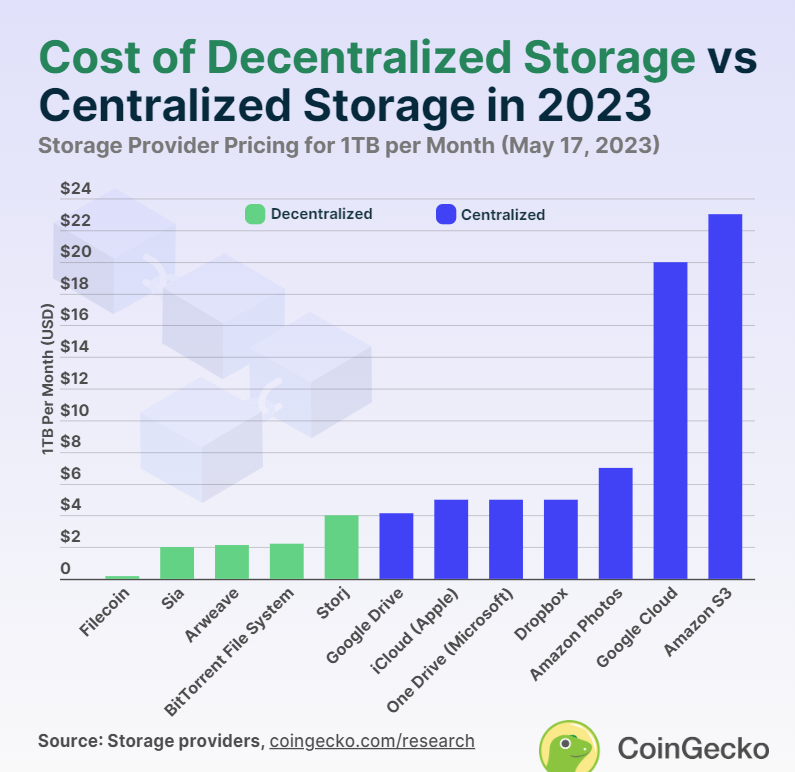
Decentralized storage is on average approximately 78.6% cheaper than centralized storage. This is because major decentralized storage providers charge an average of $2.11 per month for 1TB, whereas top centralized storage providers charge an average of $9.88 per month for personal and enterprise plans.
The most expensive decentralized storage option is still $0.16 cheaper per month for 1TB compared to the cheapest centralized alternative. Storj is the highest-priced among top decentralized storage providers at $4.00, while Google Drive offers the lowest price among leading centralized providers at $4.16. Notably, Storj charges separately for file retrieval, with download bandwidth priced at $7 per TB.
While the price difference may seem negligible for individuals considering alternatives for personal data storage, for enterprises or organizations, the cost gap between centralized and decentralized storage can accumulate significantly.
When it comes to enterprise data storage, centralized providers are far more expensive than their decentralized counterparts, with enterprise centralized storage costing up to 121 times more than enterprise decentralized solutions. For example, Amazon S3, a popular enterprise cloud storage solution, charges about $23.00 per month for 1TB—$22.81 more than Filecoin’s $0.19. Filecoin is used by organizations such as Internet Archive, which operates the Wayback Machine.
How Much Does 1TB of Decentralized Storage Cost?
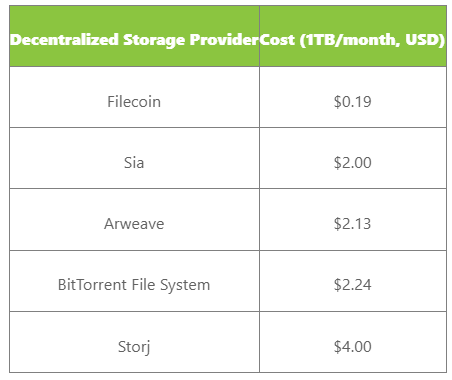
The monthly cost of 1TB of decentralized data storage ranges from $0.19 on Filecoin to $4.00 on Storj. In 2023, the average monthly cost for 1TB of decentralized data storage was $2.11.
This figure is based on an analysis of the pricing plans of the five largest decentralized storage providers: Filecoin, Arweave, Sia, Storj, and BitTorrent File System (BTFS).
1TB can store approximately 250,000 photos or 500 hours of 1080p HD video. Alternatively, it can hold 17,000 hours of audio files or tens of millions of pages of documents.
Technically, 1TB equals 1,024GB, though it is commonly rounded down to 1,000GB for consumer convenience.
Best Decentralized Storage Providers Ranked by Price
Filecoin, developed by Protocol Labs, is currently the most affordable decentralized storage provider. Filecoin achieves lower data storage prices by offering subsidies to ensure attractive block rewards.
Sia, Arweave, and BitTorrent File System (BTFS) represent mid-tier decentralized storage solutions. Notably, Arweave offers an option to lock in data storage for 200 years through a one-time prepayment.
Comparing Costs of Centralized vs. Decentralized Backup Storage
To store a copy of all existing YouTube videos for the next 100 years, enterprise-grade centralized cloud storage would cost between $7.42 billion and $8.55 billion more than decentralized storage. Assuming the total file size of YouTube videos exceeds 312 PB and current prices remain unchanged, Amazon S3 would charge $8.62 billion, Google Cloud $7.5 billion, while Filecoin would charge $71.22 million and Storj $1.5 billion.
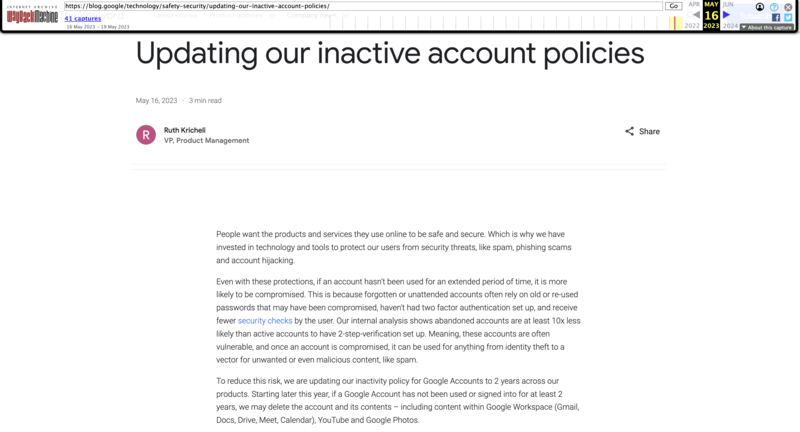
This growing interest in decentralized alternatives has been further fueled by Google's recent update to its inactive account policy, sparking controversy over user-generated data on centralized platforms and increasing demand for decentralized storage options.
As another example, storing three iconic anime series—Naruto, One Piece, and Detective Conan—for a century would cost only $497.04 on Filecoin. Arweave, which specializes in "permanent" decentralized data storage, would charge $5,572.08 to store the same three series for 100 years. In contrast, storing Naruto, One Piece, and Detective Conan on Google Drive for a century would cost an additional $10,385.52.
Nonetheless, it should be noted that pricing on decentralized storage networks tends to follow a more dynamic model and is also influenced by fluctuations in the prices of decentralized storage tokens.
Join TechFlow official community to stay tuned
Telegram:https://t.me/TechFlowDaily
X (Twitter):https://x.com/TechFlowPost
X (Twitter) EN:https://x.com/BlockFlow_News
 CoinGecko