Embracing Web2 and real-world assets, exploring the interactive metaverse world of MUA DAO
TechFlow Selected TechFlow Selected
Embracing Web2 and real-world assets, exploring the interactive metaverse world of MUA DAO
The one that will defeat Meta will not be another Meta.
 Navigating Web3 tides with focused insights
Author: duoduoyu.eth
Has the metaverse failed? Judging from Meta's massive layoffs and the current market landscape, we are indeed in a cold period for the metaverse concept. However, capital retreat and setbacks by a single player do not mean that the ultimate champion cannot emerge. Throughout history, every new dominant force has risen upon the ruins of former rulers—this cycle of renewal is inevitable.
Looking back at the development history of the metaverse, it can be roughly divided into three stages:
- The 1990s, which completed the initial conceptualization—the key achievement being the transition from idea to early attempts like "Second Life";
- The first decade of the 21st century, when open-world games became the primary model for the metaverse, with Minecraft and Roblox as its greatest achievements;
- The second decade of the 21st century, where the pandemic and Meta’s VR hardware strategy captured early momentum, yet no consensus emerged on a clear path forward.
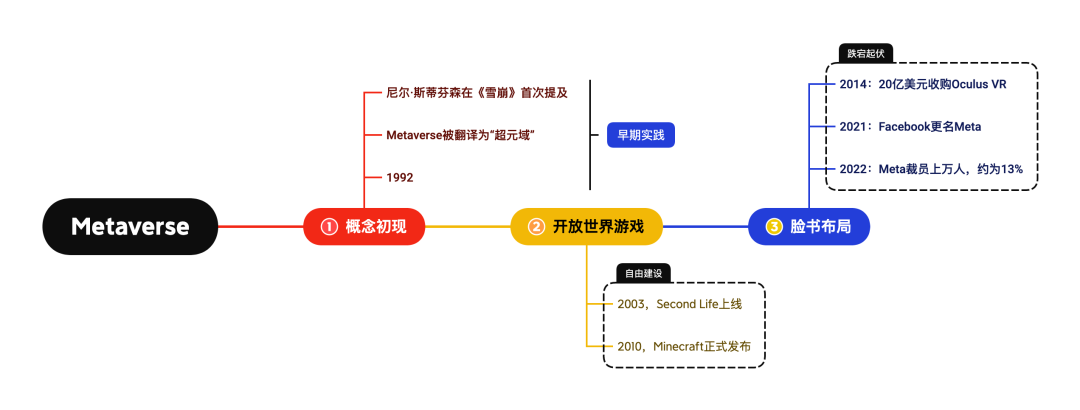
In short, the metaverse is undergoing a paradigm shift—expanding beyond singular gaming scenarios into industries such as manufacturing, education, and healthcare; evolving from fragmented, isolated silos toward an integrated, unified universe.
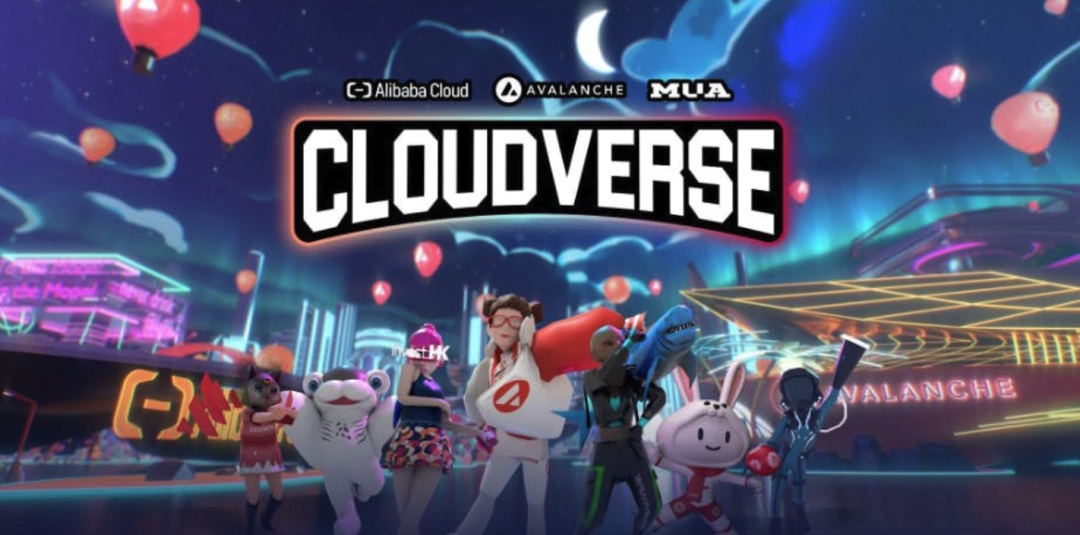
In early May, Alibaba Cloud joined forces with Avalanche and MUA DAO, leveraging their respective strengths in cloud services, public blockchains, and the metaverse, to launch Cloudverse, an enterprise-focused metaverse solution built within MUA DAO’s self-developed MUAverse platform—reigniting hope for the metaverse.
MUA DAO aims to lead the third phase of metaverse development, starting with consumer applications and gradually enriching interoperability between internal NFTs and real-world assets—wherein lies the future of the metaverse, waiting to be uncovered.
In this collaboration, MUA DAO will provide full-scenario middleware services for Cloudverse—from creation to customization—offering users unified programmability and interoperability. Meanwhile, MUA DAO’s proprietary metaverse platform, MUAverse, opens up new possibilities for the future of the metaverse.
So who exactly is MUA DAO? What unique advantages does MUAverse offer? We’ll explore these questions together below.
MUA DAO’s Three-Step Strategy: From Fragmented Silos to an Interactive Unified Universe
Let us begin with the core problem: lack of interoperability is the root of all current issues. Meta’s Web2 mindset of monopolizing channels is destined to fail!
In *Rick and Morty*, Grandpa Rick possesses the ability to freely traverse across observable universes—swapping configurations including family members, partners, and worldviews at will. Yet during the last metaverse boom, what we saw was mostly boundless fragmentation—a so-called “fragmented” state of the metaverse:
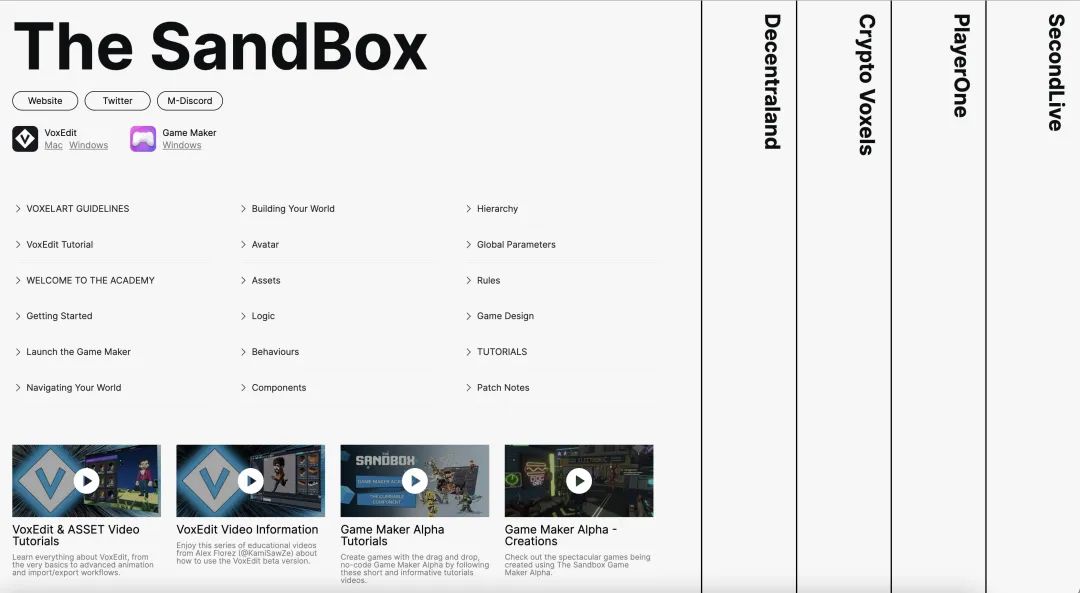
- Assets cannot interoperate: even platforms within the Ethereum ecosystem such as Otherside, The Sandbox, and Decentraland have independent NFT assets and character systems. Each project focuses solely on staking claims rather than cooperation;
- User experience is fractured: take The Sandbox as an example—while it has around 300K blockchain addresses, active users number only about 300. Most mainstream platforms see fewer than 1,000 active on-chain users. This directly leads to poor user retention, causing advertisers and businesses to remain hesitant, preventing any flywheel effect for user growth;
- Commercial use cases are limited: on current metaverse platforms, users typically experience only pixelated, Minecraft-style avatars. Companies often rush in to build so-called “metaverse headquarters,” but lack sustained operational strategies or customer acquisition methodologies.
MUA DAO’s solution starts from the ground up—with fundamental technical architecture—to drive the evolution from fragmented metaverses toward an interactive, unified universe. Only when various metaverse platforms open up and interconnect can we build a truly interconnected multiverse. As the Southern Song poet Xin Qiji once said, “Let me try my hand at mending the broken sky”—only by repairing existing fractures can we move forward.
The significance of this mission is immense: MUA DAO must mend the entire current metaverse system. At minimum, this includes achieving collective “consensus” beneath public chains, connecting everything—online and offline—and expanding into new markets, targeting both Web2 beginners and Web3 natives alike.
Achieving all this requires MUA DAO’s own three-step strategy.
Step One: Building the Metaverse’s Foundational Standards
MUA DAO chooses to establish unified asset and usage standards. The entire metaverse can be divided into three layers—from top to bottom: the user layer, execution layer, and foundational consensus layer. Users need not worry about which public chain or metaverse they are interacting with—they simply focus on experiencing the product itself.
Under MUA DAO’s vision, a cross-platform, cross-chain metaverse asset layer will be developed. Once built, assets can be seamlessly deployed across ETH, BNB Chain, Avalanche, Polygon, Polkadot, and more, while also integrating with major platforms such as Second Live, Ultiverse, Decentraland, and Molecule.
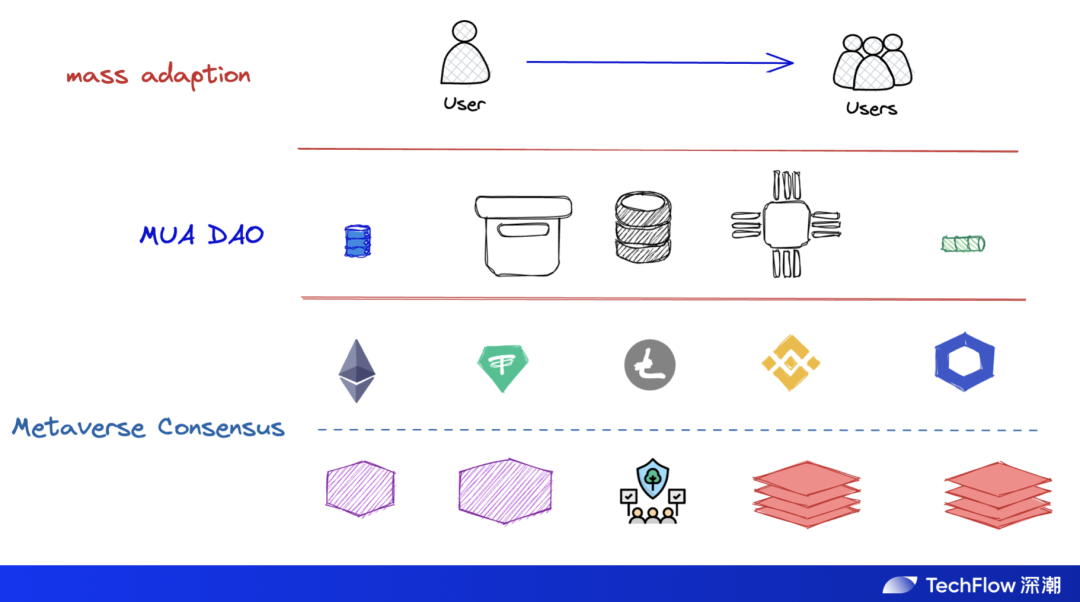
Furthermore, co-branding and joint development models will be adopted, ensuring users maintain control over their underlying data. Assets will freely migrate across platforms and chains, creating a cohesive user experience. For instance, MUA DAO has established mutual creator credential recognition with Second Live, marking its first step in market expansion.
Step Two: Making Interaction the Mainstream of the Metaverse
Users should not need to distinguish whether they’re entering the metaverse online or offline. A unified interaction experience will eliminate the barriers that currently prevent enterprises from reaching users. Specifically, in 2022, MUA DAO partnered with multiple metaverse platforms to host competitions aimed at enhancing developer engagement and user conversion. It even collaborated with MIT on academic courses and developer training programs, upgrading Gen Z’s understanding of the metaverse from the developer side.
A notable case was the MUA Flash Ops design event launched during the Tokyo Marathon, where MUA DAO built an achievement and display system for runners inside the metaverse. Real-world performance data was seamlessly synced on-chain and could be showcased or transferred across any universe—an effective demonstration of combining SBTs (Soulbound Tokens) with DIDs (Decentralized Identifiers).
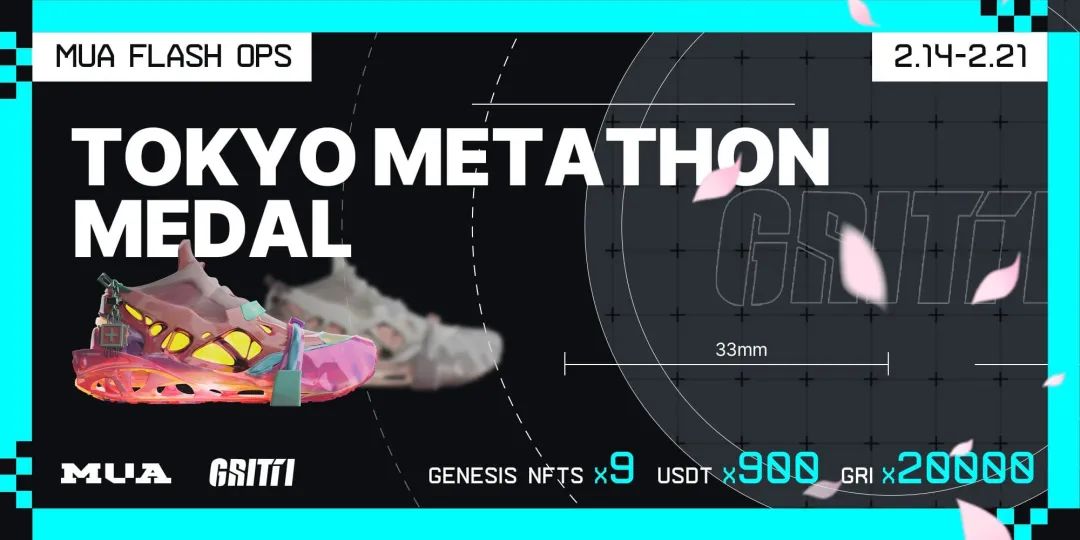
Once developer and user numbers reach critical mass, new commercial scenarios naturally emerge—setting the stage for the third phase of healing fragmentation.
Step Three: Making RWA (Real-World Assets) the Value Backbone of the Metaverse
MUA DAO’s collaboration with Alibaba exemplifies the convergence of Web3 and Web2.
- On one hand, MUA DAO positions itself as middleware for metaverse development, packaging all functionalities into APIs available for developers and platforms to call upon.
- On the other hand, the Alibaba Cloud ecosystem and MUA DAO aim to bring more real-world economies into the fold. For example, any enterprise linked to Alibaba Cloud can access customized metaverse solutions through Alibaba Cloud’s BD system and the Cloudverse login portal.
Since the Cloudverse solution was announced at Avalanche Summit, MUA DAO has already delivered tailored solutions for over 15 real-world enterprises—including energy, real estate, and banking sectors—in less than a week, actively bringing Web2 companies into the metaverse.
For instance, MUA DAO collaborates with wallets like MetaMask and Unipass, where Unipass allows users to log into crypto wallets directly via email. Any company can thus enter the metaverse through this pathway, enjoying both Web3-level security and Web2-friendly usability.
After completing its three-step strategy, MUA DAO has solidified its vision for the metaverse’s future. The journey continues—discovering genuine application scenarios through practice will be the decisive factor in the metaverse’s ultimate success.
MUAverse: Steering the Metaverse Toward a New Era
The metaverse has not failed. MUA DAO remains committed to long-term efforts, mending today’s shortcomings and regrets. As the metaverse evolves into human infrastructure, what might its trajectory look like after successfully executing the three-step strategy?
In truth, entertainment should never have been the sole identity of the metaverse. As Liu Cixin once remarked, “You gave me Facebook when humanity wanted the stars.” On a broader cosmic scale, the vastness of space should reflect human ambition—and the richness of the metaverse should encompass all imagination.
Let us consider a more “mundane” perspective—several practical application scenarios of the metaverse may include evolved business models, all-encompassing functional contexts, and individuals’ holistic freedom and development within the metaverse.
Business Model Evolution: Breaking Beyond Rent-Based Economies
To date, metaverse business models can be broadly categorized into two types. The early model primarily revolves around land trading, mimicking real-world commercial real estate logic—hoarding digital plots to later lease or sell as traffic grows. This is essentially a blockchain version of rent-seeking economics.
In contrast, MUA DAO is actively exploring a second business model—one driven by real utility, attracting more people and businesses to create a closed-loop commercial ecosystem, akin to how Taobao replaced physical shopping districts—a next-generation evolution of traffic-based economies.
Real utility in the metaverse begins by addressing disconnections between chains, platforms, and virtual-real economies, ultimately building inclusive on-chain commercial spaces. MUAverse serves precisely as the gateway for such traffic distribution.
Prior to MUA DAO, traditional enterprises had attempted metaverse entry—most notably in fashion. Brands like Adidas, Nike, PUMA, luxury names such as Prada, LVMH, Bulgari, and industrial-financial giants like Porsche and Visa entered the space. Yet the core issue remained: a lack of authentic, complete use cases.
Currently, product logic across metaverses is inconsistent. Yuga Labs centers on NFTs, Sand focuses on land—but MUA DAO believes “scenarios” are foundational. Whether for user onboarding, developer building, or platform integration, solving the scenario problem is paramount.
Take RTFKT, Nike’s collaborative venture—the main flaw lies in weak social features and limited real-world ties. While gradual experimentation links digital collectibles to physical sneakers, a clear disconnect persists, leaving NFTs without solid value backing.
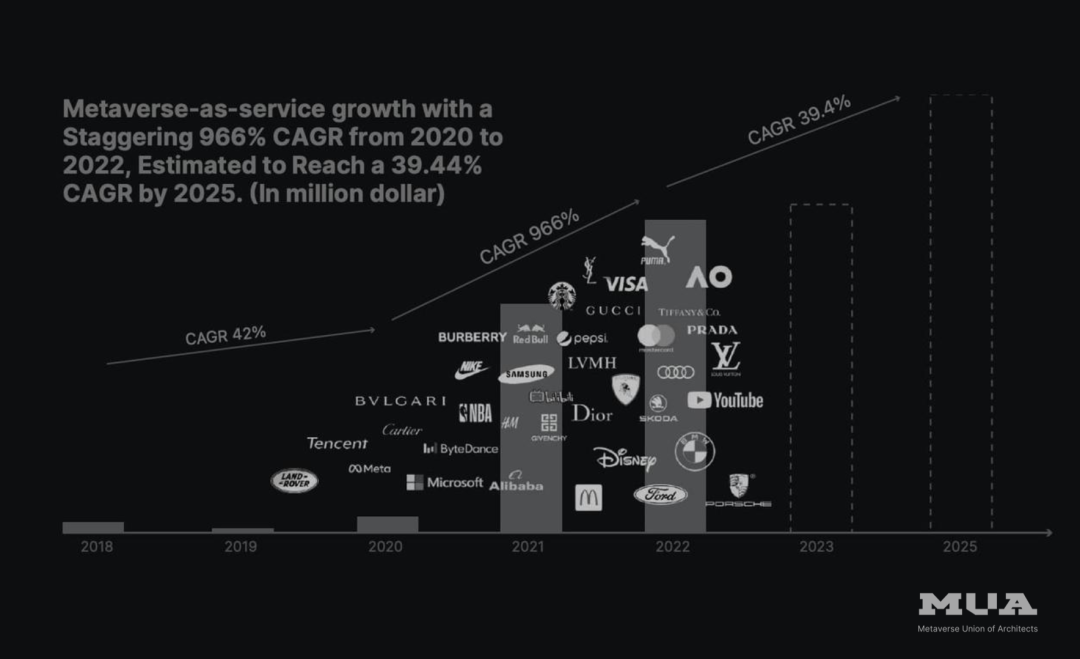
MUAverse envisions giving NFTs a full life cycle within the metaverse. Upon entry, users receive a 3D DID version that connects their on-chain address and identities across metaverses. The emergence of a unified identifier establishes clear behavioral patterns from the user side.
Scenario Society: Everything Is Scenario, Scenario Is Everything
Imagine a world where metaverse applications are rich enough—what could we do inside? When both physical and digital realms become seamlessly traversable, how would we define our location? Perhaps there’s no need to define—just adapt contextually.
- First, how should offline-on-chain interactions work? MUA DAO offers a real-world example: a rapper hosting a concert. The typical process involves personal branding, pre-event promotion, and community engagement. Through collaboration with QuestN, users can participate in activities to earn tokens, NFTs, and OATs as proof of involvement.
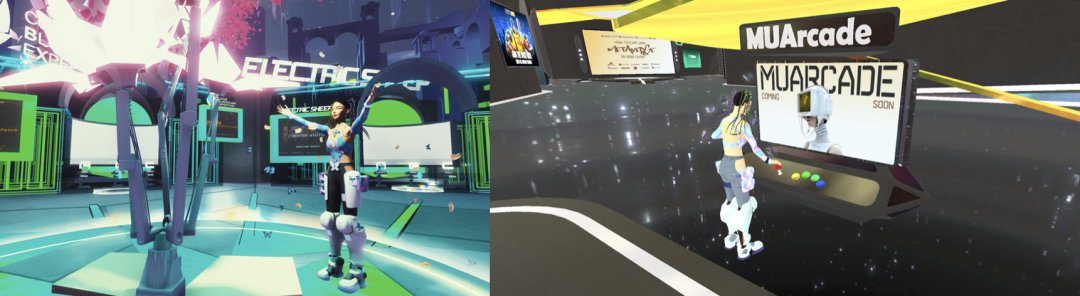
The same rapper avatar displayed in Ultiverse and SecondLive
- Next, MUAverse will create unified assets and materials, using MUAverse as the origin point that maps directly onto other metaverse platforms. After the concert, a comprehensive evaluation can be conducted across ecosystems—no need to track participation per platform.
- Finally, NFTs and achievement systems minted on-chain can directly link to physical-world items. A fun example: during Hong Kong Web3 events, MUAverse-minted digital assets were directly tied to physical T-shirts.
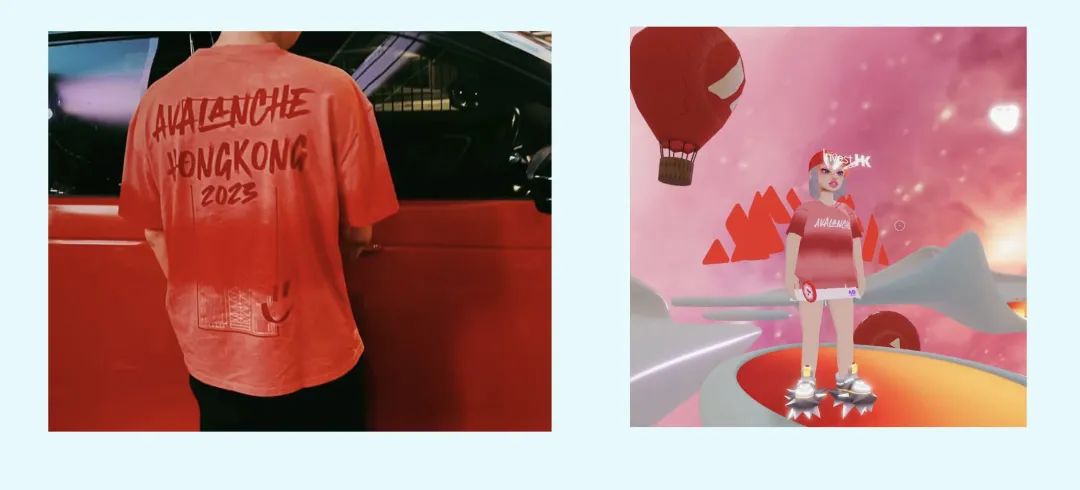
From this foundation, MUAverse becomes a pioneer in metaverse scenarization—commercial applications no longer confined to specific product forms. Whether Bitcoin NFT ecosystems represented by BRC-20, or real-world assets under RWA, all can be integrated into MUAverse, offering more efficient in-metaverse trading experiences.
Moreover, MUAverse is highly inclusive. Take the viral AIGC products—for example, the MUAverse engine supports avatar creation across multiple platforms and is progressively adapting AI-NPCs and other digital human technologies. The metaverse provides the stage, while content atop it can be endless—unconstrained by fixed mental models.
Starting from the end goal, MUAverse will become an on-chain commercial hub, fundamentally distinct from any existing blockchain dApp, enabling richer commercial scenarios.
Future-Oriented: Enabling Full and Free Personal Development
Beyond commercial and scenarized capabilities, the MUAverse-powered metaverse must ultimately empower ordinary users. As Scroll co-founder Zhang Ye put it: “Crypto is all about community ownership.”
Lose Meta, lose users; lose users, lose everything. Ensuring users aren’t reduced to passive consumers in the future metaverse era is a central focus of MUAverse’s development.
Thus, user roles must remain fluid. Ownership and construction of an open metaverse will be granted collectively to all community members. A prime example is the architect (“mArchitects”) achievement system—MUA aims to gather talented creators into the DAO, using Web3 organizational structures to forge new production relationships capable of generating returns far exceeding those of traditional internet models.
In today’s creator economy dominated by centralized platforms, creators and designers generate immense value yet, due to unequal power dynamics with platforms, rarely receive commensurate rewards.
For instance, even master architects designing landmark commercial buildings in the real world capture only a tiny fraction of total revenue. Most profits go to developers, construction firms, and financial institutions. In the metaverse, however, production relations are rebalanced—creators can earn sustainable income within equitable, decentralized reward systems.
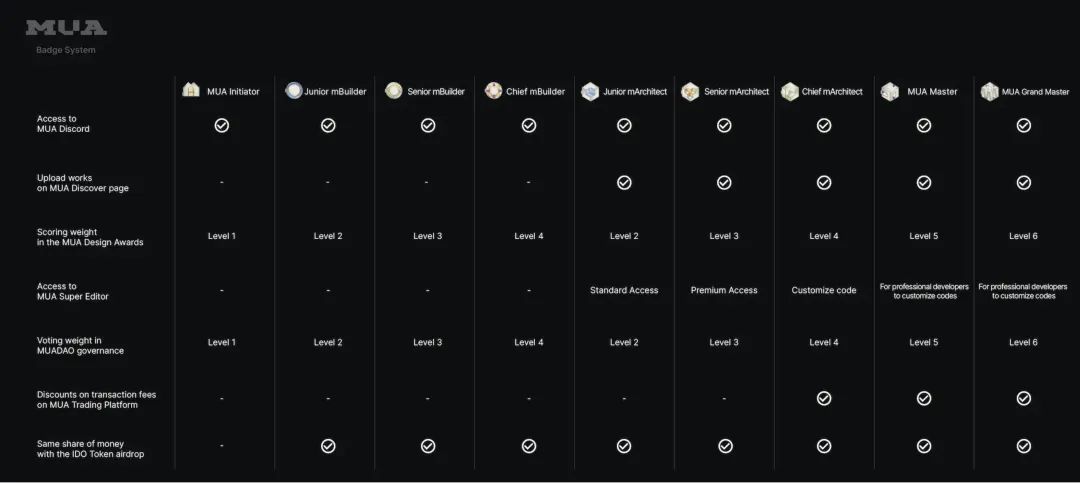
Additionally, MUA DAO features its own badge system, categorizing community members by design capability into different tiers. Badge levels determine varying governance rights within the DAO, ensuring decentralization at the structural level. A mature, systematic pool of designer talent also avoids cold-start challenges on the developer side, ensuring skill growth keeps pace with market demand.
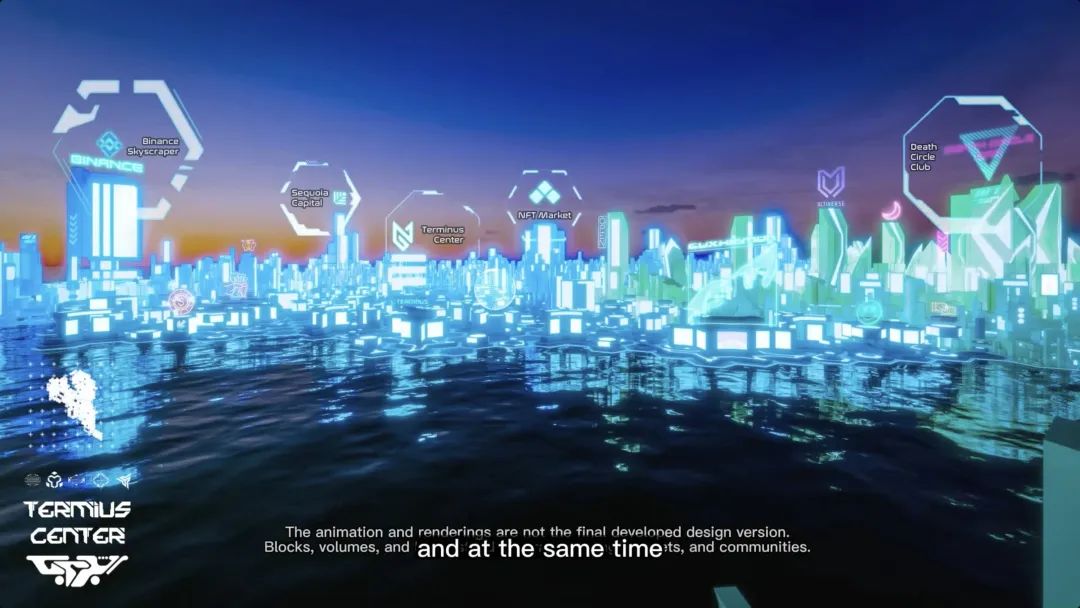
For example, the Build Your Meta-skyline competition co-hosted with Ultiverse encourages architects to use the MUA engine to develop futuristic city skylines—cyberpunk dreams from *Cyberpunk 2077* come alive before our eyes. These creations aren’t limited to a single metaverse; MUA-built assets can be replicated across platforms, generating continuous traffic appeal.
MUAverse offers diverse engines and customizable development settings—enabling users to create personal artwork or design their own battle games through the engine. Building upon traditional tools like Unreal and Unity, MUAverse specifically targets metaverse development needs—lowering entry barriers, simplifying NFT creation, and focusing purely on building.
The Departing World of Yesterday, and the Future Nation of Tomorrow
We were deceived by what we loved most—that was our optimism.
Since the pandemic began in 2020, some humans have grown accustomed to online interaction. We once believed this was the entirety of the metaverse—cheap pixel combinations, stiff and dull digital avatars, heavy and expensive hardware gear. But by 2022, we began doubting the metaverse altogether, believing the familiar old world would persist forever.
Yet history has not ended. The recent rise and fall of the metaverse is merely one chapter in its natural progression. Its inherent laws continue advancing steadily toward the future. Humanity’s current commercial models are unsustainable—globalization recedes, regionalism rises; land plots and tiny images on-chain prove unviable. Real asset backing, universal interaction standards, and consistent asset formats—all converge within MUAverse’s construction. Over the next decade, a new behavioral economic model will emerge: everything on-chain, everything human, belongs to the unified universe.
The human world will merely be a subset of the metaverse.
Within MUAverse’s metaverse, ample space is reserved for each individual’s free development. Unlike the horror of consciousness uploading depicted in *Black Mirror* or *Westworld*, MUAverse does not see virtual and real, offline and on-chain, Web2 and Web3 as incompatible. Instead, it confronts today’s fragmented, boring, reinvented-wheel pseudo-metaverse reality head-on—returning to the internet’s original principle of connectivity, while using MUAverse to enable real-world adoption. Personal data and isolated platform islands will be gradually connected, ushering in a new paradigm revolution for the metaverse.
The old world we know will inevitably fade into history—just as in past struggles for dominance, the one who defeats the old king will never be another copy of the same. The one who defeats Meta will certainly not be another Meta.
MUAverse is now exploring a new future. Born into Web3, MUA DAO—now partnering with Alibaba Cloud’s ecosystem serving millions of enterprise users—could become the catalyst for positive flywheel growth across the entire metaverse sector. The formula for paradigm change is set. With accumulated technical expertise and increasingly mature metaverse middleware technology, let’s look forward to MUA DAO’s new world of interactive metaverses!
Join TechFlow official community to stay tuned
Telegram:https://t.me/TechFlowDaily
X (Twitter):https://x.com/TechFlowPost
X (Twitter) EN:https://x.com/BlockFlow_News
 深潮TechFlow